
Post-Quantum Security and the Future of Medical AI Infrastructure

Why Healthcare Must Prepare Now
Healthcare is approaching a historic security transition.
For decades, hospitals and healthcare systems focused primarily on:
data storage,
HIPAA compliance,
identity management,
and conventional cybersecurity.
That model is no longer sufficient.
Artificial intelligence, cloud-native infrastructure, distributed medical systems, and emerging quantum computing capabilities are changing the entire security landscape.
The healthcare industry now faces a difficult reality.
The encryption protecting medical records today may eventually become vulnerable tomorrow.
This creates one of the most important strategic questions in healthcare technology:
How do we secure medical intelligence systems for the post-quantum era?
Why Healthcare Data Is a Prime Target
Healthcare information is among the most valuable data categories in existence.
Medical datasets contain:
identity information,
prescription histories,
genomic data,
insurance records,
biometric information,
behavioral health details,
and lifetime patient histories.
Unlike credit cards, medical identities cannot simply be replaced.
A stolen patient history may remain sensitive for decades.
This creates long-term national and economic security implications.
Healthcare systems increasingly operate as critical infrastructure.
As AI becomes integrated into healthcare operations, the attack surface expands dramatically.
The Quantum Computing Threat
Quantum computing introduces a fundamentally different computational model.
Unlike classical systems, quantum systems can solve certain mathematical problems exponentially faster.
This matters because modern encryption often depends on problems that are difficult for classical computers.
Future quantum systems may eventually weaken or break portions of today’s cryptographic infrastructure.
That creates a major concern known as:
Harvest Now, Decrypt Later.
Harvest Now, Decrypt Later
Attackers may already be collecting encrypted medical information today with the expectation that future quantum systems could decrypt portions of it later.
This means healthcare organizations cannot wait until quantum systems become mainstream.
Migration planning must begin early.
Healthcare data possesses unusually long retention timelines.
A patient’s medical history may remain relevant for:
decades,
entire lifetimes,
or even across generations.
That makes healthcare especially vulnerable to future cryptographic disruption.
Why Traditional Healthcare Security Is Not Enough
Most healthcare security systems were designed for:
perimeter defense,
password-based identity,
centralized trust assumptions,
and reactive monitoring.
AI-native healthcare systems require a very different architecture.
Future medical systems increasingly require:
cryptographic execution verification,
distributed trust,
runtime attestations,
immutable evidence trails,
and post-quantum-ready key governance.
Security is evolving from:
protecting files
to
governing execution.
That distinction is critical.
The Rise of Post-Quantum Cryptography
Post-quantum cryptography refers to algorithms designed to resist attacks from future quantum systems.
Healthcare organizations are increasingly exploring:
Kyber,
Dilithium,
Falcon,
hybrid cryptographic models,
and crypto-agile architectures.
The goal is not simply stronger encryption.
The goal is survivable infrastructure.
Future healthcare systems require security architectures capable of evolving over time without catastrophic redesign.
Why Crypto Agility Matters
One of the largest weaknesses in traditional healthcare infrastructure is rigidity.
Many systems were built with:
hardcoded assumptions,
inflexible trust models,
and long replacement cycles.
Healthcare infrastructure often remains operational for decades.
That creates risk.
Post-quantum migration requires crypto agility.
Crypto agility means:
cryptographic systems can evolve,
algorithms can rotate,
trust anchors can migrate,
and governance can adapt.
Healthcare organizations increasingly need architectures capable of surviving cryptographic evolution.
AI Changes the Security Equation
AI systems dramatically expand healthcare attack surfaces.
Modern medical AI environments may include:
APIs,
orchestration engines,
autonomous agents,
cloud inference systems,
distributed workflows,
and external model providers.
Every new connection becomes a potential trust problem.
This is why future healthcare infrastructure increasingly requires:
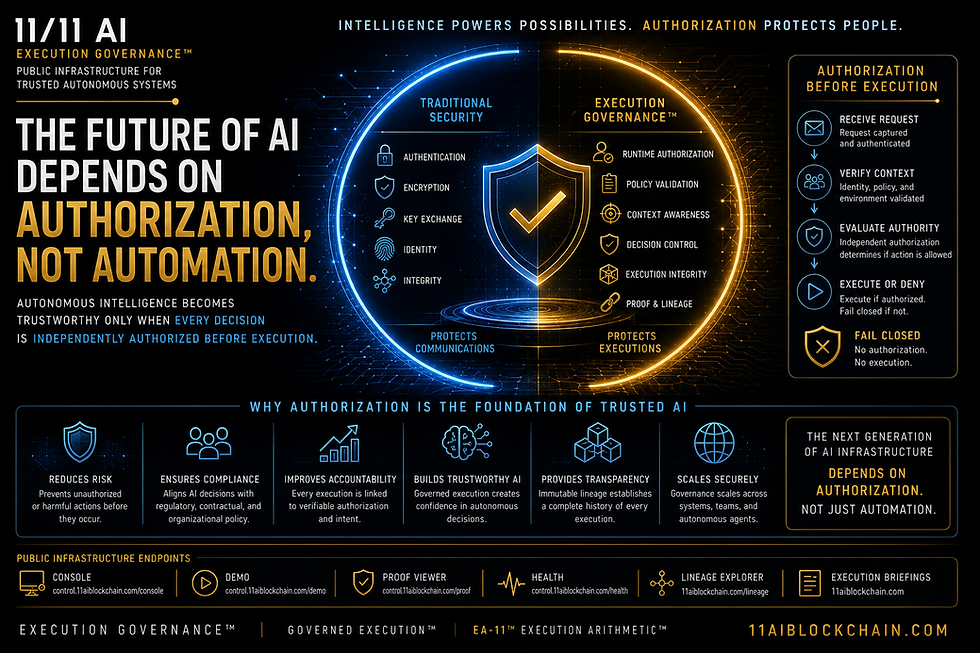
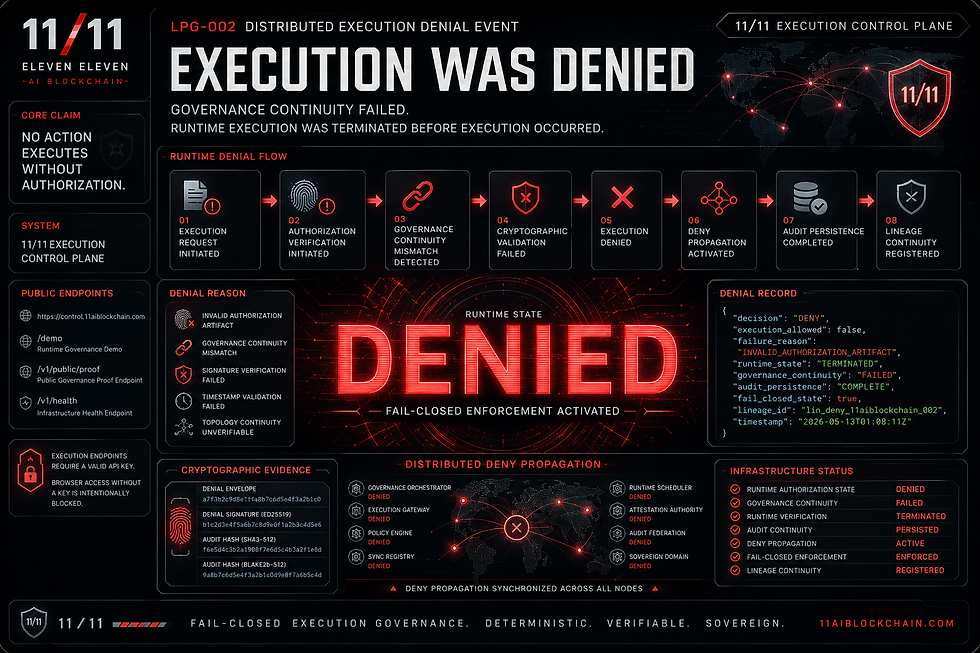
execution governance,
deterministic authorization,
runtime identity validation,
and cryptographic evidence systems.
The Emerging Importance of Execution Identity
Traditional systems authenticate users.
Future AI-native healthcare systems must increasingly authenticate execution itself.
Organizations need to know:
what model executed,
where it executed,
who authorized it,
what policy applied,
and whether the environment was trusted.
This creates the emergence of execution identity.
Execution identity may eventually become as important as user identity.
Medical AI and Immutable Audit Systems
Healthcare increasingly requires evidence.
Future medical AI systems may need to prove:
how decisions occurred,
what data influenced them,
whether policies were satisfied,
and whether outputs were modified.
This creates growing demand for:
immutable audit systems,
signed execution records,
cryptographic lineage,
and deterministic governance logs.
Traditional logging infrastructure is no longer enough.
Healthcare AI systems increasingly require evidence-grade auditability.
Why Hospitals Need Zero-Trust AI
The zero-trust movement transformed cybersecurity.
Healthcare AI is entering a similar transition.
Future healthcare systems may increasingly assume:
no AI system is trusted automatically,
no execution is approved by default,
and every workflow requires validation.
This creates the emergence of zero-trust AI architecture.
In this model:
identity becomes cryptographic,
execution becomes policy-bound,
and auditability becomes continuous.
The Strategic Importance of Governance Layers
As healthcare AI systems become more autonomous, governance layers become more valuable.
The governance layer sits beneath applications and controls:
authorization,
execution validation,
runtime policy,
audit lineage,
and trust enforcement.
This infrastructure position becomes strategically powerful because:
applications may change rapidly,
but governance infrastructure persists.
The organizations controlling trusted execution infrastructure may eventually shape:
compliance standards,
interoperability models,
and regulated AI deployment frameworks.
National Security Implications
Healthcare is not only a commercial sector.
It is also a national infrastructure category.
Medical systems intersect with:
public health,
biosecurity,
military medicine,
emergency response,
pharmaceutical supply chains,
and population analytics.
AI governance and post-quantum healthcare security therefore become strategic national priorities.
Future healthcare infrastructure may eventually require:
sovereign trust frameworks,
domestic cryptographic governance,
and evidence-grade execution systems.
Why the Industry Is Unprepared
Most healthcare organizations remain focused on:
application deployment,
AI convenience,
workflow acceleration,
and operational efficiency.
Very few are preparing for:
post-quantum governance,
execution authorization,
AI containment,
and cryptographic runtime evidence.
This creates a dangerous gap between AI capability and infrastructure trustworthiness.
That gap will eventually force architectural change.

The Next Era of Medical Infrastructure
Healthcare is moving toward a future where AI systems may influence:
treatment,
diagnostics,
insurance decisions,

Comments