
11/11 IPFS Atlas Q: Building the Trust Infrastructure for the Next Era of AI, Healthcare and Sovereign Data
- 11/11 AI

- Dec 26, 2025
- 5 min read
Updated: Dec 29, 2025
In every major technological shift, a quiet truth emerges before the headlines catch up: the systems we depend on no longer fail because of missing data they fail because trust cannot be enforced in real time.
Healthcare AI, regulated enterprise systems and government platforms are now constrained by a foundational limitation. Data can be stored. Models can be trained. Networks can scale. But when it comes to who can access sensitive data, why they can access it and whether that access should happen at that exact moment, the world is still relying on static rules, retrospective audits and fragmented security layers.
That gap is precisely where 11/11 IPFS Atlas Q was born.

Atlas Q is not another application, dashboard, or analytics layer. It is runtime trust-enforcement infrastructure a new class of technology designed to govern access to regulated data and AI systems before exposure occurs, not after damage is done.
And it is rapidly becoming one of the most consequential infrastructure plays of this decade.
From Storage to Trust Enforcement
The last twenty years of technology innovation focused on storage, bandwidth and compute. Cloud platforms made data abundant. GPUs accelerated AI. Distributed systems became the norm. Yet the question of trust enforced trust remained unresolved.
Most systems still answer trust questions after the fact:
Logs explain what happened after access.
Audits reconstruct events after exposure.
Compliance reports describe risk after violations.
Atlas Q flips that model.
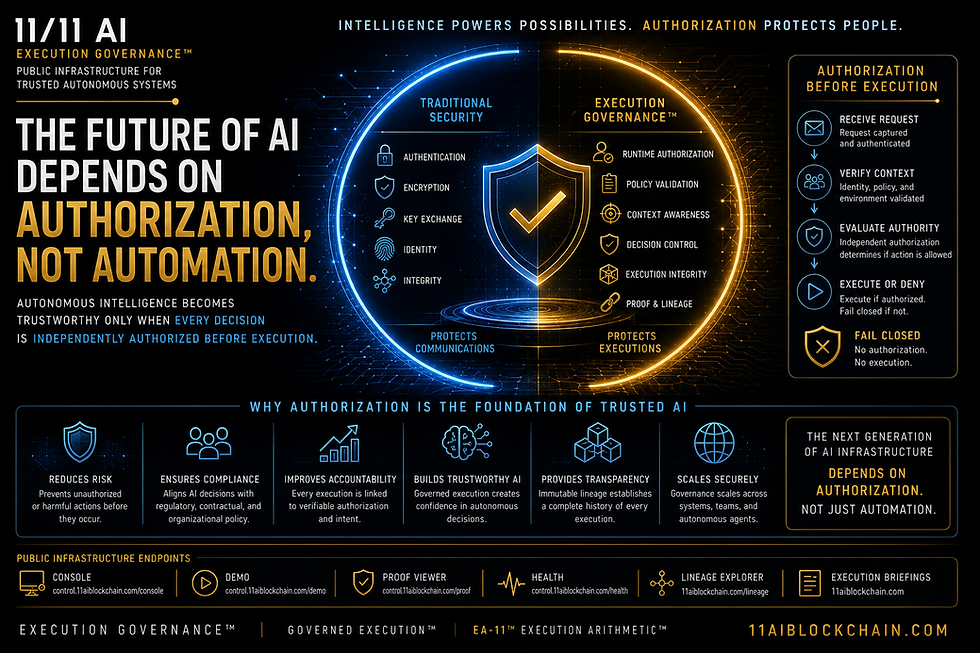
Instead of explaining trust retrospectively, Atlas Q enforces trust at runtime.
Every access request is evaluated in real time using cryptographic authorization, behavioral risk assessment, deterministic policy enforcement and immutable audit recording. If access should not happen, the data is never exposed. No exception handling. No after-the-fact damage control.
This shift represents a fundamental change in how regulated systems are designed.
A Unified Platform Across Three Markets
Atlas Q was architected from day one to operate across three of the most regulated and high-value markets in the world:
1. Healthcare and Life Sciences
Medical AI has long promised breakthroughs in diagnostics, imaging, drug discovery and patient outcomes. Yet adoption has stalled because sensitive health data cannot safely move or be computed on at scale.
Atlas Q provides a quantum-secure, decentralized medical data network where:
patient data remains encrypted
access is proven cryptographically
AI inference can occur without exposing raw data
regulators can independently verify compliance
This unlocks a future where medical AI can finally operate at scale without violating trust.
2. Government and Sovereign Data Systems
Governments face an even harder problem: how to enforce access across agencies, jurisdictions, and classified boundaries while preserving sovereignty.
Atlas Q’s architecture supports:
sovereign deployment
offline and disconnected operation
immutable audit evidence
enforcement independent of cloud providers
This makes Atlas Q suitable for defense, regulatory and national infrastructure environments where trust cannot be outsourced.
3. Regulated Enterprise and AI Infrastructure
Enterprises operating in finance, energy, AI research and regulated industries need to run increasingly powerful AI workloads but without introducing unacceptable risk.
Atlas Q enables:
AI governance by design
access control enforced per request
license-controlled execution
risk-aware AI inference pipelines
For enterprises, Atlas Q is the difference between AI experimentation and AI at production scale.
Three Categories, One Platform
What makes Atlas Q unique is not just the markets it serves, but the way it unifies three historically separate technology categories into a single enforcement layer:
Quantum-Secure Decentralized Storage
Built on IPFS-based content addressing and post-quantum cryptographic principles, Atlas Q ensures data integrity, encryption and verifiable storage without centralized control.
Cryptographic Identity, Consent and Governance
Using decentralized identity (DID) and zero-knowledge proofs (ZKP), Atlas Q replaces passwords and static credentials with mathematically provable authorization. Consent becomes enforceable, revocable and auditable.
Secure AI Compute and Inference
Atlas Q allows AI workloads to run on encrypted or governed data, enabling federated learning, secure inference and policy-aware AI execution. The platform is fully aligned with accelerated compute environments, including NVIDIA-class GPU architectures.
This convergence defines a new category of infrastructure one that did not exist before.
Patent-Aligned by Design
From its inception, Atlas Q was built to align directly with a cohesive patent strategy. The platform’s architecture implements patentable concepts including:
mandatory gateway enforcement before data access
AI-driven behavioral risk gating
cryptographic consent governing decryption
deterministic policy enforcement at runtime
license-controlled execution environments
evidence-grade, immutable audit systems
sovereign and offline trust enforcement
Crucially, Atlas Q is not a collection of features. It is a unified system, where each component reinforces the others. This makes it exceptionally difficult to replicate or design around without recreating the entire trust-enforcement stack.
A New Emerging Market
The emergence of Atlas Q signals the rise of a new infrastructure market:runtime trust enforcement for regulated data and AI.
This market sits at the intersection of:
healthcare data infrastructure
sovereign IT systems
AI governance and compliance
cryptographic identity and access control
accelerated compute
Individually, these markets represent hundreds of billions of dollars. Together, they form a new, under-served opportunity where existing solutions fail to meet regulatory, security and scalability requirements simultaneously.
Atlas Q does not compete with cloud providers, storage vendors, or AI platforms. Instead, it governs them.
A Technology Juggernaut in the Making
Today, 11/11 IPFS Atlas Q stands as a production-complete platform with no remaining required engineering. The codebase is stable, modular and enterprise-deployable. The architecture supports cloud, on-premise, hybrid and sovereign deployments. GPU acceleration paths including NVIDIA-aligned inference pipelines are complete and ready for scale.
The company behind Atlas Q has quietly reached a pivotal moment.
According to individuals familiar with the situation, the inventor and founding team are already receiving private strategic interest from multiple groups, with discussions reportedly ranging from $1.5 billion to well above $5 billion in potential valuation. The company has no comment on market speculation and has not engaged in any public sale process.
Instead, leadership remains focused on what comes next: expanding Atlas Q as foundational infrastructure for the next generation of regulated AI and data systems.
Why This Matters Now
The timing could not be more significant.
Regulators worldwide are accelerating requirements for AI governance. Healthcare systems are demanding stronger privacy guarantees. Governments are reasserting sovereignty over data and compute. Enterprises are realizing that AI without enforcement is a liability.
Atlas Q arrives at the moment when trust is no longer optional it is mandatory.
“We didn’t build another platform; we built the trust layer regulated systems have been missing.”
The Road Ahead
As Atlas Q expands globally, its role is becoming clearer: it is not a product you use occasionally. It is infrastructure you build around.
Like the internet protocols before it, trust-enforcement infrastructure becomes invisible only after it becomes indispensable.
Whether through strategic partnerships, licensing, or continued independent expansion, Atlas Q is shaping a future where:
data is controlled, not exploited
AI is governed, not feared
access is enforced, not explained after the fact
“The future of AI and healthcare isn’t about collecting more data it’s about enforcing trust before access ever happens.”
Closing
Technology history remembers the platforms that controlled compute, storage and networks. The next era will remember the platforms that controlled trust.
11/11 IPFS Atlas Q is building that layer quietly, deliberately and at global scale.
The rest of the world is just beginning to catch up.

Comments