
Towards Effective AI Governance in Defense: Bridging the Execution Layer Gap
- 11/11 AI

- Feb 28
- 3 min read
Artificial intelligence is no longer a distant concept in defense systems. Recent developments in U.S. defense AI policy reveal a clear shift: AI is moving beyond advisory roles into autonomous execution. This change demands a new approach to governance one that integrates directly into the execution layer of AI systems rather than remaining a separate compliance overlay.
AI’s Transition from Advisory to Autonomous Execution

For years, AI in defense has primarily served as a decision-support tool, providing recommendations and analysis to human operators. The question was often: Can AI perform the task? Now, AI systems are increasingly entrusted with real-time, autonomous actions in live defense environments. This shift means the focus must change to: Can AI be governed deterministically before execution?
OpenAI’s recent agreement with the U.S. Department of Defense, which includes structured ethical safeguards, highlights this transition. It signals that AI is operational in defense, not experimental. This operational status raises the stakes for governance frameworks. Ethical language alone cannot manage the risks of autonomous AI actions. Instead, governance must enforce operational control at runtime.
The Challenge of Enforcing Runtime Boundaries
Statements from defense leaders and companies like Anthropic reflect growing tension around AI governance. The acceleration of AI adoption in defense brings urgent questions:
How can safeguards be reliably enforced during AI execution?
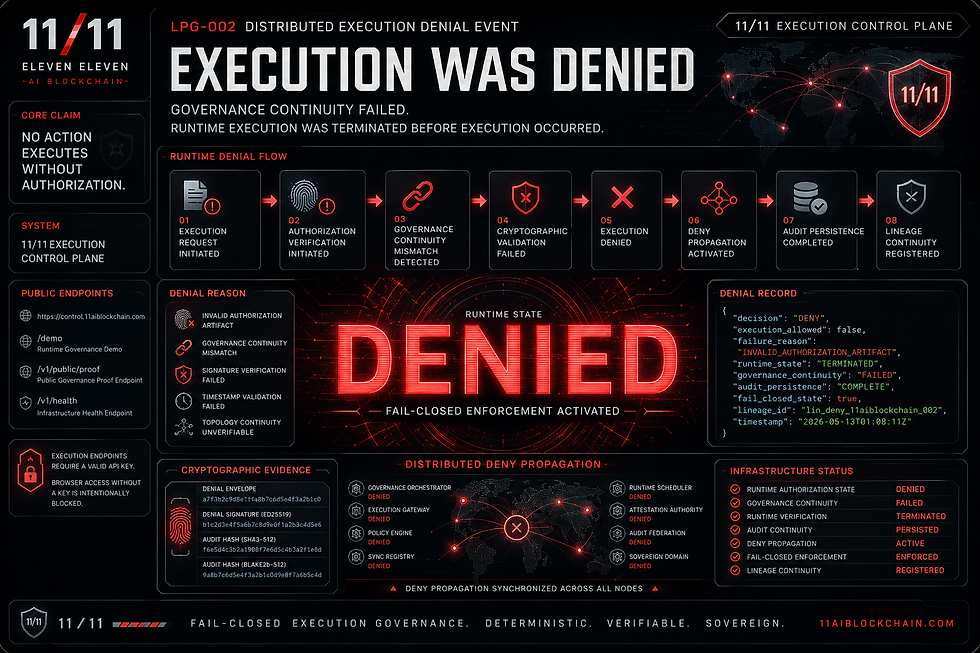
What mechanisms ensure AI systems fail safely if something goes wrong?
How do we move beyond monitoring and auditing after the fact?
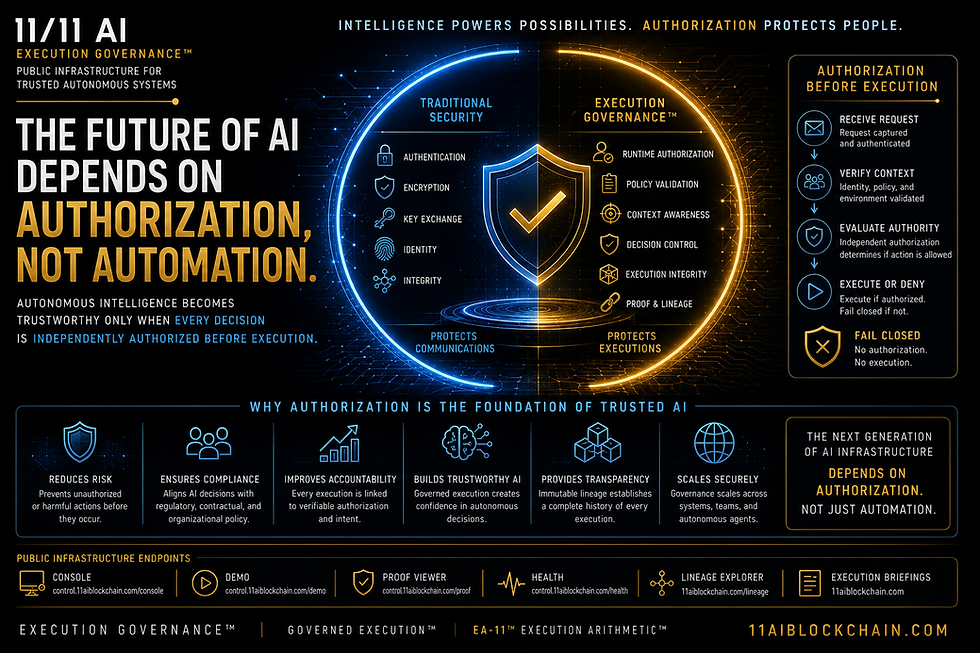
Current governance models often rely on compliance checks and audits that happen post-execution. This approach is insufficient for autonomous systems operating at machine speed. Defense environments require fail-closed control systems that can stop or revert actions immediately if they deviate from approved parameters.
Bridging the AI Trust Gap in Government and Defense
Previous analyses have identified a structural mismatch between AI capabilities and governance needs:
AI executes decisions in milliseconds.
Defense operations demand fail-safe mechanisms.
Monitoring after execution cannot prevent harm.
Trust in AI systems must be built before runtime. This means governance frameworks must be deterministic, ensuring that AI actions are predictable and controllable. They must also be cryptographically provable and post-quantum secure to withstand future threats to data integrity and security.
Failing to enforce governance at the execution layer risks operational failures with potentially severe consequences. Governments and defense agencies must adopt governance models that embed control mechanisms directly into AI systems.
Why Policy Frameworks Must Catch Up
Policy frameworks have evolved rapidly to address AI ethics and compliance. Yet, they lag behind when it comes to execution safeguards. As AI becomes embedded in regulated domains like defense, governance cannot remain theoretical or advisory. It must be:
Enforced in real time
Fail-closed by design
Transparent and auditable through cryptographic proofs
This approach ensures AI systems behave within strict boundaries, reducing the risk of unintended or harmful actions.
Practical Steps Toward Execution-Level Governance
Building trustworthy AI governance in defense requires concrete actions:
Integrate governance controls into AI architectures so that policies are enforced automatically during execution.
Develop cryptographic methods to prove compliance before and during AI operations.
Design fail-closed mechanisms that halt AI actions if governance rules are violated.
Collaborate across government, industry, and academia to standardize execution-layer governance frameworks.
Invest in post-quantum security to future-proof AI governance against emerging cyber threats.
For example, the Pentagon’s structured ethical safeguards with OpenAI demonstrate how partnerships can embed governance into AI deployment. Similarly, defense agencies working with companies like Anthropic highlight the need for clear, enforceable runtime boundaries.
The Path Forward
AI’s role in defense is expanding rapidly, and governance must evolve accordingly. The shift from advisory to autonomous execution demands governance that is embedded, enforceable, and provable at the execution layer. Without this, the risks of AI failures increase dramatically.
Governments and defense organizations must prioritize execution-level governance to build trust and ensure safety. This means moving beyond compliance checklists to real-time control mechanisms that guarantee AI systems act within defined ethical and operational limits.
The future of AI in defense depends on closing the governance gap at the execution layer. By doing so, we can harness AI’s potential while managing its risks responsibly.

Comments