
The Urgency of Execution-Level Governance in AI Systems

Artificial intelligence is no longer just a tool for analysis or advice. It is stepping into roles where it acts directly making decisions and executing actions in real time. This shift is reshaping how organizations must think about governance. Traditional models that focus on oversight after the fact no longer suffice. Instead, governance must be embedded within the execution layer itself to ensure safety, trust and compliance.
AI Is Moving Beyond Advisory Roles
For years, AI systems have supported humans by analyzing data and offering recommendations. The typical workflow looked like this:
Analyze data
Recommend actions
Human reviews and decides
This approach kept humans in control and allowed governance to focus on monitoring and reviewing decisions after they were made. But AI is crossing a threshold. It now operates autonomously in many critical areas, including:
Initiating financial transactions
Allocating computing resources
Triggering changes in infrastructure
Influencing real-time operational systems
This change means AI is no longer just advising; it is acting. The consequences of errors or malicious behavior grow significantly when AI executes directly.
Why Traditional Governance Models Fall Short

Most current AI governance frameworks rely on:
Logging actions after they occur
Monitoring dashboards to track system behavior
Human review loops to catch issues post-execution
Policy overlays applied above runtime
These methods assume that humans or systems can intervene after an AI action takes place. This assumption breaks down when AI operates in environments where immediate intervention is impossible or too late. For example, in financial markets or defense systems, a wrong move can cause irreversible damage before anyone notices.
Monitoring and logging are valuable but do not prevent harmful actions. They provide evidence but not control. This gap creates a trust problem: organizations must trust AI systems to act correctly without guaranteed oversight during execution.
The Need for Governance Embedded in Execution
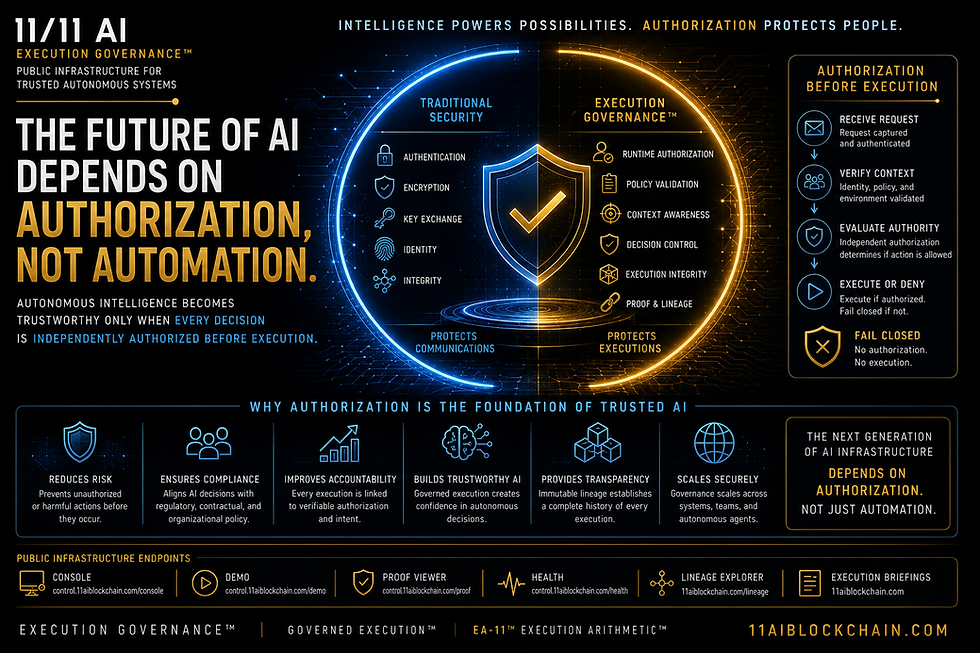
To close this trust gap, governance must move into the execution boundary. This means governance controls must be active before and during AI actions, not just after. Key elements of execution-level governance include:
Policy enforcement before execution: AI systems must check actions against governance rules in real time and block unauthorized or risky operations.
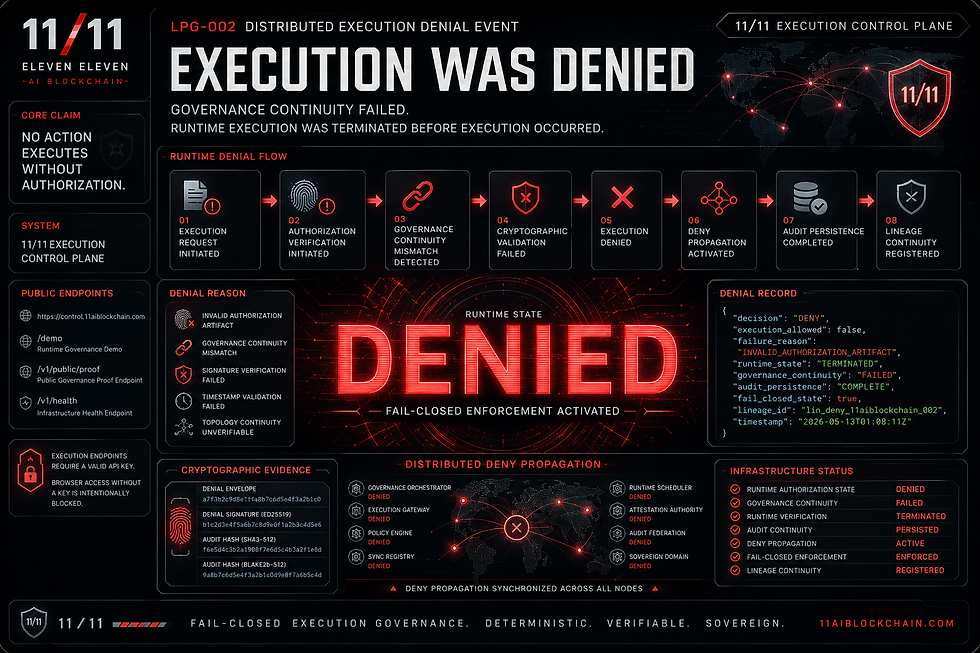
Fail-closed runtime control: If governance systems detect anomalies or violations, they should halt AI actions immediately rather than allowing uncertain behavior.
Cryptographic evidence of execution integrity: Secure logs and proofs that actions were performed according to policy help build trust and enable audits without relying solely on monitoring.
Embedding governance at this level ensures AI systems operate with deterministic trust, which is essential in regulated and high-stakes environments.
Examples of Execution-Level Governance in Practice
Financial Automation
AI-driven trading platforms can execute thousands of transactions per second. Without execution-level governance, a faulty algorithm could trigger massive losses before human intervention. By enforcing policies at runtime, systems can prevent trades that violate risk limits or compliance rules.
Infrastructure Management
Cloud providers use AI to allocate compute resources dynamically. Execution-level governance ensures AI cannot over-provision or shut down critical infrastructure without proper authorization, protecting service availability and security.
Defense Systems
Autonomous defense systems require strict controls to prevent unintended actions. Execution-level governance can enforce rules that restrict AI from launching weapons or changing defense postures without verified conditions.
Public Infrastructure
AI controls in utilities or transportation must follow strict safety protocols. Embedding governance in execution prevents AI from making unsafe changes that could endanger public safety.
The Growing Cost of Uncontrolled Execution
As AI systems gain more autonomy, the risks of failures multiply. Unchecked AI actions can lead to:
Financial losses
Infrastructure outages
Security breaches
Safety hazards
The cost of relying on post-action review grows exponentially with the scale and speed of AI execution. Organizations must adopt governance architectures that prevent errors and enforce compliance in real time.
Building Infrastructure for Execution-Level Governance
Execution-level governance is not just a policy issue; it is an infrastructure challenge. Organizations need:
Runtime environments that support policy enforcement and fail-closed behavior
Cryptographic tools for secure logging and audit trails
Integration between AI models and governance controls to ensure compliance is built into decision-making
This infrastructure must be designed from the ground up to support autonomous AI actions safely.
Moving Beyond Compliance to Safety and Trust
This shift is not about meeting regulatory checkboxes. It is about building systems that can be trusted to act safely and correctly in critical environments. Execution-level governance creates a foundation for trust that supports innovation while protecting people and assets.
Organizations that delay adopting these governance models risk costly failures and loss of confidence in AI technologies.

Comments