
11 AI Applications Guide: What You Need to Know
- 11/11 AI

- Mar 19
- 4 min read
Updated: Apr 28
Artificial intelligence is no longer just a futuristic concept. It is here, shaping how critical sectors operate every day. From governments to financial institutions, AI is transforming processes, improving security, and enabling smarter decisions. In this guide, I will walk you through 11 AI applications that are essential to understand. These applications are not just buzzwords; they are practical tools that can enhance governance, defense, and regulated enterprises.
Understanding the AI Applications Guide
AI is a broad field, but its applications are specific and impactful. This guide focuses on real-world uses of AI that matter most to organizations handling sensitive data and critical operations. Each application I discuss has been chosen for its relevance to security, accountability, and operational efficiency.
By the end of this post, you will have a clear picture of how AI can be integrated into your systems and what benefits to expect. I will also highlight some actionable recommendations to help you get started or improve your current AI strategies.

1. AI in Cybersecurity
Cybersecurity is a top priority for any regulated institution. AI enhances threat detection by analyzing vast amounts of data in real time. It identifies unusual patterns that could indicate cyberattacks or insider threats. Machine learning models adapt continuously, improving their accuracy over time.
For example, AI-powered systems can detect phishing attempts faster than traditional methods. They can also automate responses to contain breaches immediately. This reduces the risk of data loss and operational disruption.
Actionable tip: Implement AI-driven security analytics to monitor network traffic and user behavior. Regularly update your AI models with new threat intelligence.
2. AI for Fraud Detection
Financial institutions face constant threats from fraud. AI helps by analyzing transaction data to spot anomalies. It can flag suspicious activities such as unusual spending patterns or identity theft attempts.
Unlike rule-based systems, AI learns from new fraud cases and evolves. This makes it more effective in catching sophisticated schemes. It also reduces false positives, saving time and resources.
Actionable tip: Use AI to complement your existing fraud detection systems. Train models on historical fraud data and continuously refine them.
3. Is 11% AI High?
When discussing AI adoption, you might hear figures like "11% AI integration" in certain processes. Is this high? The answer depends on the context.
For critical institutions, even 11% AI usage can be significant if it covers key operations like risk assessment or compliance monitoring. However, there is always room to expand AI’s role to improve efficiency and security further.
The key is to focus on quality and impact rather than just quantity. A well-implemented AI system that handles 11% of tasks effectively can outperform a poorly integrated system covering more.
Actionable tip: Evaluate which processes benefit most from AI and prioritize those. Measure performance improvements to justify scaling AI use.
4. AI in Predictive Analytics
Predictive analytics uses AI to forecast future events based on historical data. Governments and financial institutions use this to anticipate market trends, resource needs, or security threats.
For example, AI models can predict economic downturns or identify regions at risk of natural disasters. This allows for proactive planning and resource allocation.
Actionable tip: Integrate AI-driven predictive analytics into your decision-making workflows. Use scenario simulations to prepare for different outcomes.
5. AI for Natural Language Processing (NLP)
NLP enables machines to understand and generate human language. This is useful for automating document analysis, customer service, and compliance checks.
In regulated environments, NLP can scan contracts, regulations, or communications to ensure compliance. It can also power chatbots that handle routine inquiries, freeing up human resources.
Actionable tip: Deploy NLP tools to automate document review and regulatory reporting. Train models on your specific language and terminology.

6. AI in Autonomous Systems
Autonomous systems use AI to operate independently. This includes drones, vehicles, and robots used in defense and infrastructure monitoring.
These systems can perform tasks in hazardous environments without risking human lives. They also provide real-time data and situational awareness.
Actionable tip: Explore autonomous solutions for surveillance, inspection, or logistics. Ensure robust security measures to prevent unauthorized control.
7. AI for Identity Verification
Identity verification is critical for secure access and fraud prevention. AI enhances biometric systems like facial recognition, fingerprint scanning, and voice recognition.
These systems are faster and more accurate than manual checks. They also support multi-factor authentication, increasing security.
Actionable tip: Implement AI-based identity verification for access control and transaction approvals. Regularly audit system accuracy and privacy compliance.
8. AI in Risk Management
Risk management involves identifying, assessing, and mitigating risks. AI helps by analyzing complex data sets to uncover hidden risks and predict their impact.
For example, AI can assess credit risk, operational risk, or geopolitical risk. This supports better decision-making and resource allocation.
Actionable tip: Use AI tools to enhance your risk assessment frameworks. Combine AI insights with expert judgment for balanced decisions.
9. AI for Process Automation
Process automation uses AI to handle repetitive tasks such as data entry, report generation, and workflow management. This increases efficiency and reduces human error.
In regulated sectors, automation ensures consistency and compliance with standards. It also frees staff to focus on higher-value activities.
Actionable tip: Identify routine processes suitable for automation. Start with pilot projects and scale based on results.
10. AI in Data Privacy and Compliance
AI can help monitor data usage and ensure compliance with privacy regulations. It can detect unauthorized data access or leaks and enforce data handling policies.
This is crucial for institutions managing sensitive personal or financial information.
Actionable tip: Deploy AI-driven compliance monitoring tools. Regularly update them to reflect changing regulations.
11. AI for Decision Support Systems
Decision support systems use AI to provide insights and recommendations. They analyze data and present options to decision-makers, improving speed and accuracy.
These systems are valuable in crisis management, resource allocation, and strategic planning.
Actionable tip: Integrate AI decision support into your command centers and planning teams. Train users to interpret AI outputs effectively.
Embracing AI for a Secure Future
The applications I’ve outlined show how AI is becoming indispensable for critical institutions. From cybersecurity to decision support, AI enhances security, accountability, and operational excellence.
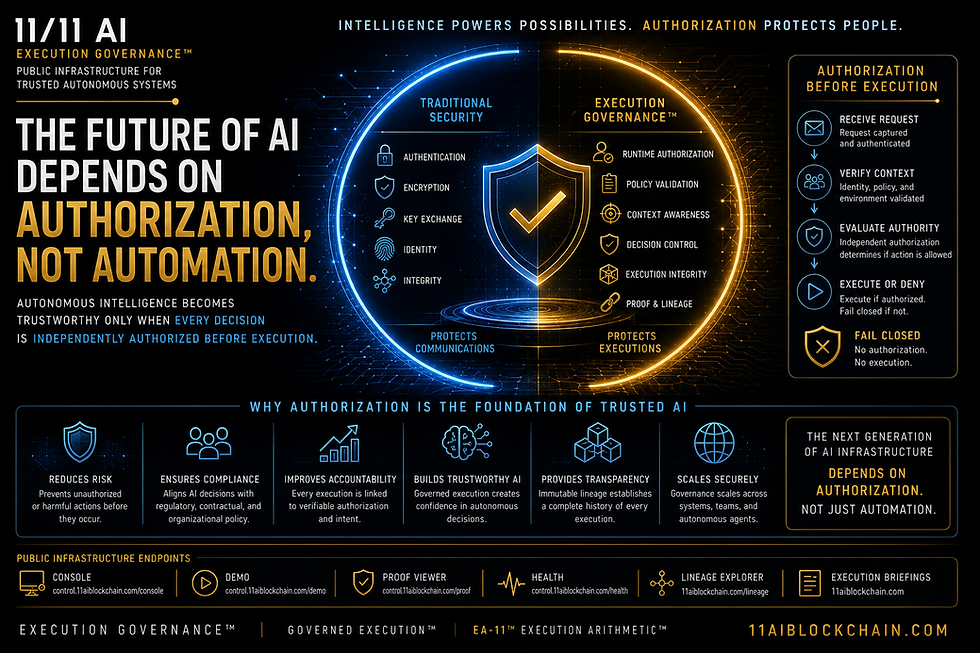
If you want to explore AI solutions tailored to your needs, consider how foundational, quantum-resilient infrastructure can future-proof your systems. This approach ensures AI remains governable and secure for decades.
For more detailed insights, check out this https://www.11aiblockchain.com/ resource.
By understanding and adopting these AI applications, you position your organization to meet today’s challenges and tomorrow’s opportunities with confidence.

Comments