
Building Resilient Infrastructure for AI and Quantum Technologies on a Global Scale
- 11/11 AI

- Dec 30, 2025
- 3 min read
Artificial intelligence and quantum technologies are transforming industries and societies worldwide. As these technologies expand beyond local environments, their infrastructure must support reliable, secure and governable operation across multiple countries and regulatory systems. Designing such infrastructure at planetary scale presents unique challenges that require new architectural approaches and long-term thinking.
This post explores the key considerations and design patterns for building infrastructure that can sustain AI and quantum systems globally. It highlights practical strategies to manage trust, policy and data over extended time horizons, helping future infrastructure leaders create systems that work consistently and safely across borders.
Challenges of Global-Scale Infrastructure
Building infrastructure for AI and quantum technologies on a global scale involves navigating complex technical and regulatory landscapes. Some of the main challenges include:
Diverse regulatory environments
Different countries have varying laws on data privacy, security and technology use. Infrastructure must adapt to these rules without compromising functionality or compliance.
Multiple threat models
Security threats vary by region and evolve rapidly. Systems must defend against cyberattacks, insider threats and geopolitical risks while maintaining availability.
Cross-jurisdictional governance
Coordinating governance across jurisdictions requires clear trust boundaries and mechanisms to enforce policies consistently.
Data sovereignty and long-term storage
Data generated by AI and quantum systems often needs to be stored and processed in compliance with local laws, sometimes for decades.
Scalability and latency
Global deployment demands infrastructure that scales efficiently and delivers low latency despite geographic distances.
Addressing these challenges requires moving beyond traditional, locally optimized designs toward architectures that embrace modularity, policy-awareness and long-term data management.
Architectural Patterns for Planetary-Scale Systems
Several architectural patterns help build infrastructure that meets the demands of global AI and quantum deployments.
Modular Trust Boundaries
Dividing the system into modules with clear trust boundaries limits the impact of security breaches and simplifies compliance. Each module can enforce local policies and security controls tailored to its jurisdiction.
Example: A global AI platform might separate data ingestion, model training and inference into distinct modules. Data ingestion modules enforce local privacy laws, while training modules operate in secure, compliant environments.
Benefit: This approach reduces risk by containing threats and enables flexible policy enforcement.
Policy-Aware Execution
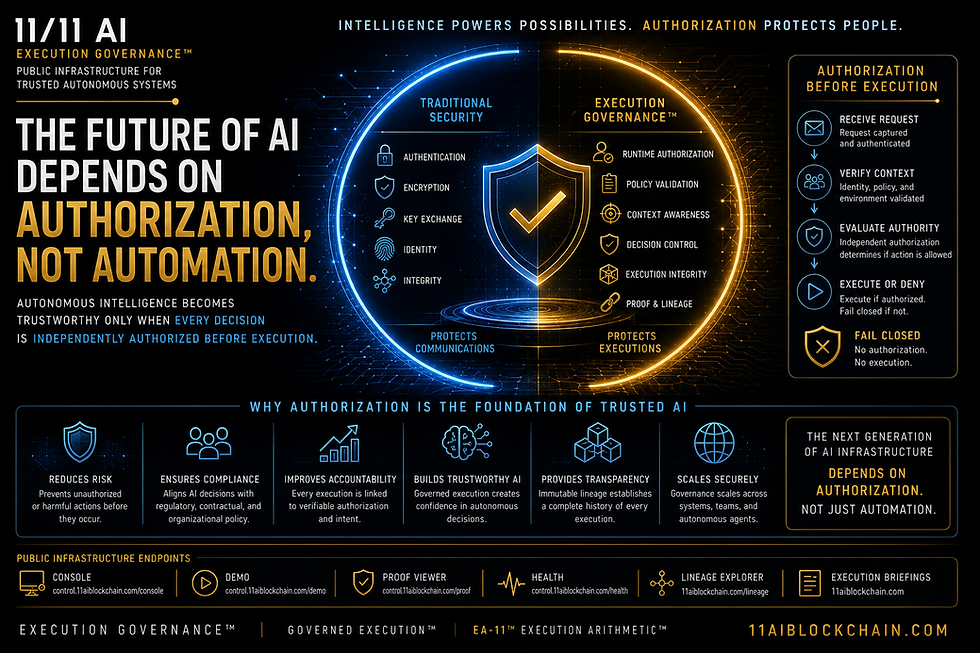
Infrastructure should integrate policy engines that evaluate and enforce rules dynamically during system operation. This ensures compliance with changing regulations and organizational policies.
Example: A quantum computing service could include a policy layer that restricts certain computations based on export controls or ethical guidelines.
Benefit: Policy-aware execution allows systems to adapt to new rules without requiring major redesigns.
Long-Horizon Data Handling
AI and quantum systems often generate data that must be preserved and audited over long periods. Infrastructure must support secure, compliant storage and retrieval across decades.
Example: Medical AI applications may require patient data retention for 20 years or more, with strict access controls.
Benefit: Long-horizon data handling ensures data integrity and legal compliance over time.
Distributed and Edge Computing
To reduce latency and improve resilience, infrastructure can leverage distributed computing nodes closer to users and data sources.
Example: Edge nodes running AI inference near users in different countries can provide faster responses while respecting local data laws.
Benefit: This reduces network delays and supports local autonomy.
Practical Steps for Building Global Infrastructure
Building planetary-scale infrastructure involves careful planning and execution. Here are practical steps to guide the process:
Map regulatory requirements early
Understand the legal landscape in all target regions to design compliant data flows and controls.
Design for modularity
Break systems into components with clear interfaces and trust boundaries to simplify updates and policy enforcement.
Implement dynamic policy engines
Use software that can interpret and apply policies at runtime, enabling quick adaptation to new rules.
Invest in secure, scalable storage
Choose storage solutions that support encryption, auditing and long-term retention.
Use distributed architectures
Deploy computing resources near users to improve performance and resilience.
Plan for governance and transparency
Establish clear roles and processes for managing infrastructure across jurisdictions.
Examples of Global AI and Quantum Infrastructure
Several organizations have begun implementing infrastructure that reflects these principles:
Google’s AI infrastructure spans multiple data centers worldwide, using modular components and policy controls to comply with regional laws.
IBM Quantum Network connects quantum computing resources globally, with governance frameworks that address export controls and security.
European Open Science Cloud supports distributed data storage and processing with strict data sovereignty controls.
These examples show how global infrastructure can balance performance, security and compliance.
The Future of Global Infrastructure Leadership
Leaders building infrastructure for AI and quantum technologies must think beyond local optimization. They need to design systems that operate reliably and securely across diverse environments and over long timeframes.
This requires:
Embracing modular, policy-aware architectures
Prioritizing transparency and governance
Investing in technologies that support distributed and edge computing
Planning for evolving regulatory and threat landscapes
By adopting these approaches, infrastructure can support the safe and effective deployment of transformative technologies worldwide.

Comments