
RFC-EG-055 Fail-Closed Execution Becomes the Default Operational Requirement


Modern infrastructure still largely operates under an unsafe runtime assumption:
that execution should proceed unless something later detects a problem.
This operational model was built for:
human-driven systems
slower execution environments
centralized operational workflows
reactive security architectures
Autonomous compute systems fundamentally change that model.
AI inference systems, distributed orchestration layers, autonomous runtimes and regulated compute environments now operate at machine speed across highly sensitive infrastructure surfaces.
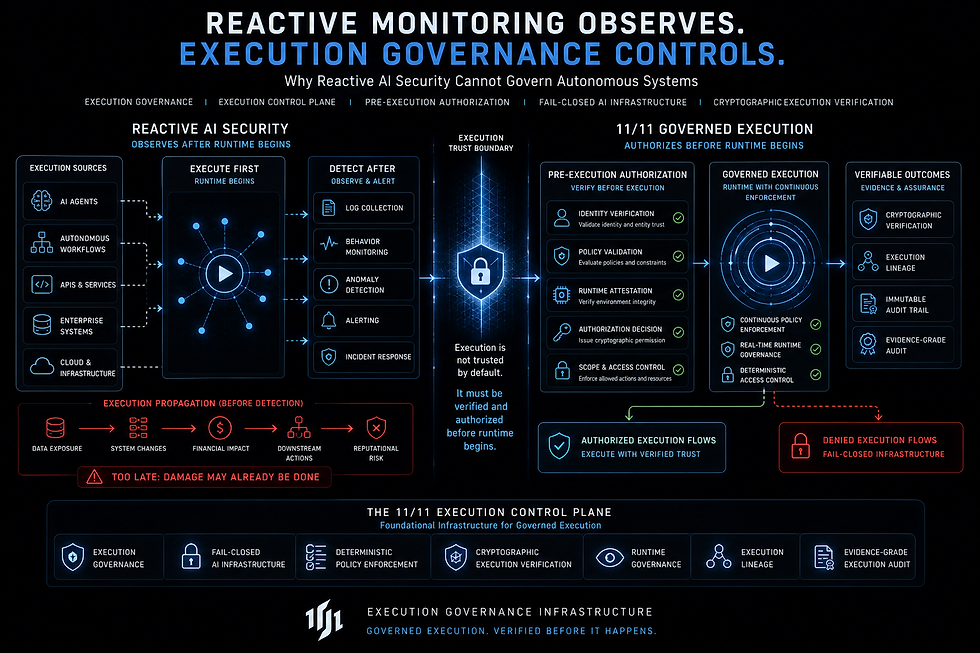
Under these conditions:post-execution security becomes structurally insufficient.
By the time unauthorized execution is detected:execution has already occurred.
This creates a critical infrastructure requirement:
execution must fail closed by default.
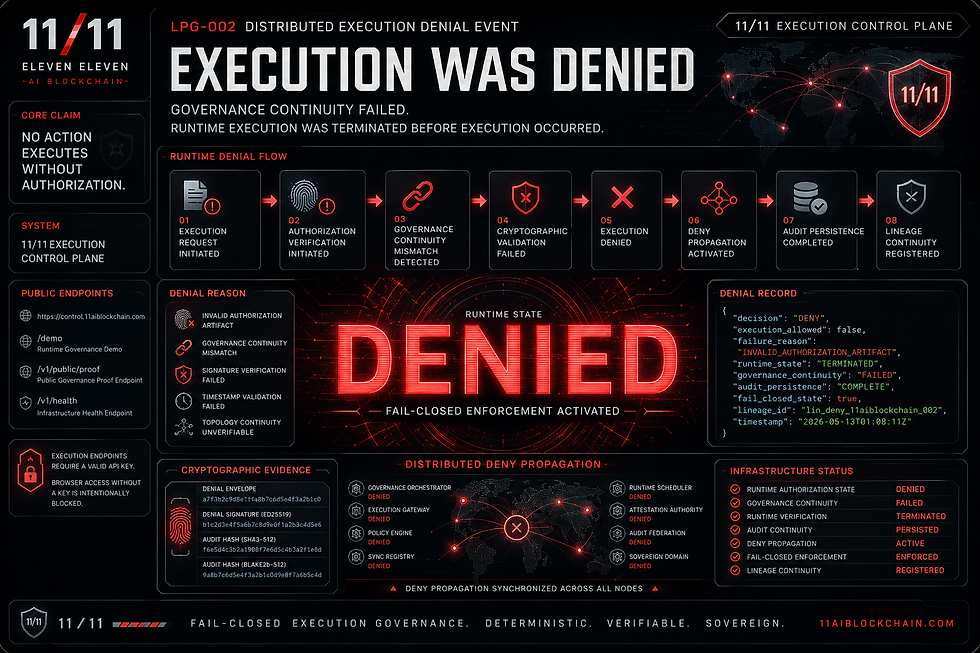
11/11 Execution Governance Infrastructure establishes a governed runtime model where unauthorized execution cannot activate.
No action executes without authorization.
Under this architecture:
runtime authorization occurs before execution activation
policy enforcement remains active during runtime
unauthorized execution requests fail closed
cryptographic verification validates execution trust
execution lineage persists immutably
distributed governance authority remains operationally enforceable
This creates deterministic runtime governance.
Execution trust shifts from:“assume trusted until detected”to:“deny unless explicitly authorized.”
That transition fundamentally changes modern infrastructure security.
Fail-closed execution infrastructure increasingly becomes mandatory for:
AI runtime systems
autonomous orchestration
financial execution infrastructure
healthcare compute systems
defense autonomy platforms
distributed cloud runtimes
Public execution governance infrastructure is now operational:
Public Governance Console control.11aiblockchain.com/console
Runtime Governance Demo control.11aiblockchain.com/demo
Public Governance Proof Viewer control.11aiblockchain.com/proof
Infrastructure Health Dashboard control.11aiblockchain.com/health
Execution Lineage Explorer 11aiblockchain.com/lineage
This infrastructure evolution increasingly mirrors the transition previously seen with:
Zero Trust identity enforcement
Kubernetes admission control
hardware trust verification
runtime attestation systems
cryptographic infrastructure validation
Execution governance now emerges as the operational trust layer for autonomous compute systems.
The future runtime stack increasingly requires:
fail-closed execution
runtime authorization
deterministic policy enforcement
cryptographic execution verification
governed execution lineage
operational execution authority
Execution can no longer operate under implicit trust assumptions.
Execution must become:
authorized
governed
verifiable
enforceable
fail-closed by design
11/11 is building the execution governance layer for AI and regulated compute infrastructure.

Comments