
Navigating Manus AI’s Growth and the Urgent Need for Governance in AI Infrastructure
- 11/11 AI

- Feb 26
- 3 min read
Artificial intelligence is no longer just growing; it is accelerating at a pace that challenges traditional business and regulatory frameworks. Manus AI’s rapid rise highlights this shift clearly. What used to take years now happens in a few months. Adoption curves are steep, investments are pouring in, and the demand for AI infrastructure is surging. Yet, behind this impressive growth lies a critical issue: the AI stack is evolving faster than governance structures can keep up.
This post explores Manus AI’s meteoric growth, the forces driving this acceleration and why governance in AI infrastructure is essential for the future.
The Forces Behind Manus AI’s Rapid Rise
Manus AI’s growth is not an isolated event. It reflects three major trends reshaping the AI industry:
Enterprise AI Adoption
Organizations in government, defense, finance and healthcare are moving beyond pilot projects. They are deploying AI systems in real-world, mission-critical environments. This shift means AI is no longer a tool for experimentation but a core part of operational decision-making.
Model-Centric Scaling
AI models have evolved from simple chatbots to complex decision engines. These large models now influence critical outcomes, such as defense strategies, financial transactions and healthcare diagnostics. Their scale and complexity demand more than just performance they require reliability and accountability.
Infrastructure Arms Race
Control over AI infrastructure compute power, data pipelines, and inference governance is becoming a key competitive advantage. Whoever manages these elements effectively will shape the future of AI deployment.
Together, these forces create a landscape where speed and scale are impressive but also risky without proper governance.
The Hidden Risks of Hypergrowth
Rapid scaling of AI platforms like Manus AI raises important questions:
Who controls how AI models behave in sensitive environments?
How are AI-driven decisions audited and verified?
What compliance frameworks ensure AI outputs meet regulatory standards?
Can AI systems operate safely under frameworks like CMMC, SOC 2, HIPAA, ISO 27001, or Department of Defense regulations?
Growth alone does not answer these questions. Without structured control, hypergrowth creates a trust gap, especially in sectors where errors can have serious consequences.
For example, in healthcare, an AI system that misinterprets patient data could lead to harmful treatment decisions. In finance, ungoverned AI could trigger unauthorized transactions or regulatory violations. In defense, lack of governance could compromise national security.
The Infrastructure Gap in AI Development
Manus AI’s rise exposes a critical gap in the AI ecosystem. Most AI platforms focus on performance speed, accuracy and scale. Few are designed with governance as a foundational element.
As AI becomes embedded in sensitive workflows, a new infrastructure layer is necessary. This layer must provide:
Deterministic execution: AI systems must behave predictably and consistently.
Auditability: Every decision and data flow should be traceable.
Compliance: Systems must meet industry and government standards.
Security: Protecting data and models from unauthorized access or manipulation.
Without these features, organizations risk deploying AI that is fast but fragile, powerful but untrustworthy.
What Governance Means for AI Infrastructure
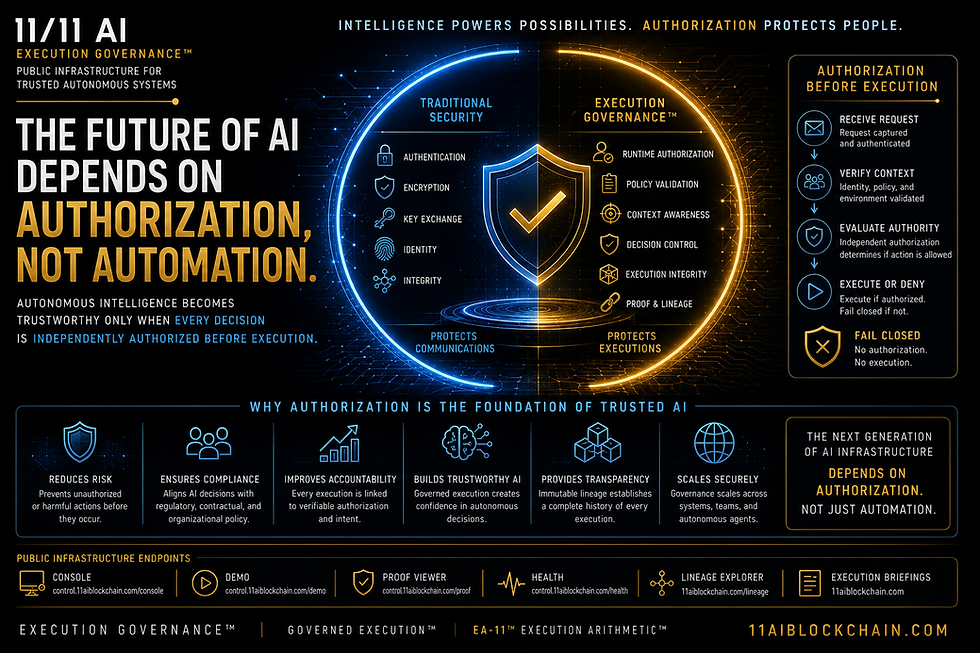
Governance in AI infrastructure is about more than rules. It involves building systems that can be trusted to operate safely and transparently. This includes:
Clear accountability: Defining who is responsible for AI decisions.
Transparent processes: Making AI workflows understandable to auditors and regulators.
Continuous monitoring: Detecting and correcting errors or biases in real time.
Regulatory alignment: Ensuring AI systems comply with relevant laws and standards.
For example, a financial institution using AI for credit decisions must be able to explain how those decisions were made and prove compliance with fair lending laws. Defense agencies need assurance that AI-driven strategies follow strict security protocols.

Moving Toward a Governance-Ready AI Stack
The next phase of AI development requires a shift from performance-only platforms to governance-ready infrastructure. This means:
Integrating governance tools directly into AI pipelines.
Designing models with built-in audit trails.
Collaborating with regulators to define clear standards.
Investing in infrastructure that supports secure, compliant AI operations.
Manus AI’s growth signals the urgency of this shift. As AI systems become more powerful and widespread, governance will determine which platforms succeed and which fail.
Practical Steps for Organizations
Organizations adopting AI should consider these steps to prepare for governance challenges:
Assess current AI infrastructure for gaps in auditability and compliance.
Implement monitoring tools that track AI decisions and data flows.
Engage with regulators early to understand evolving standards.
Train teams on governance best practices to ensure accountability.
Choose AI platforms that prioritize governance alongside performance.
These actions help reduce risk and build trust with stakeholders, customers and regulators.
Final Thoughts
Manus AI’s meteoric growth is a clear sign that the AI industry is entering a new era. Speed and scale are impressive, but they bring risks that cannot be ignored. Governance in AI infrastructure is no longer optional it is essential for safe, reliable and compliant AI deployment.

Comments