
The Evolution of AI Agents into Autonomous Systems: A Vision for 2025-2030

Artificial intelligence is moving beyond simple task assistance toward fully autonomous systems capable of managing complex operations with minimal human intervention. Between 2025 and 2030, AI agents will evolve into sophisticated entities that not only assist but also orchestrate, learn and execute in real-world environments. This transformation will reshape enterprise infrastructure and control layers, enabling new levels of efficiency and adaptability.

From Assistants to Orchestrators
Today’s AI agents often function as assistants, responding to commands or providing information. The next phase will see these agents evolve into orchestrators that coordinate multiple systems and processes. This shift requires a new kind of infrastructure that supports seamless communication between AI components and human operators.
Orchestration means AI agents will manage workflows across diverse environments, such as supply chains, manufacturing lines, or IT operations. For example, an autonomous system in a factory might coordinate robots, sensors and inventory management software to optimize production without human oversight. This requires AI to understand dependencies, prioritize tasks and adapt to changing conditions in real time.
Memory and Context as Foundations
A key enabler of autonomy is the ability to remember past interactions and contextual information. Unlike current AI assistants that often treat each request independently, future autonomous systems will maintain persistent memory. This memory will allow them to build a detailed understanding of their environment and history, improving decision-making over time.
For instance, an AI agent managing a smart building will recall past energy usage patterns, maintenance issues and occupant preferences. This memory helps the system anticipate needs, prevent failures, and optimize resource use. Persistent memory also supports transparency and accountability, as systems can explain their actions based on historical data.
Self-Learning Loops for Continuous Improvement
Autonomous AI systems will rely heavily on self-learning loops to refine their performance. These loops involve collecting data from real-world execution, analyzing outcomes and adjusting behavior without human intervention. This continuous feedback cycle enables AI to improve accuracy, efficiency and resilience.
Consider an autonomous delivery drone fleet. Each drone collects data on flight paths, weather conditions and delivery success rates. The system analyzes this data to optimize routes, avoid obstacles and reduce energy consumption. Over time, the fleet becomes more reliable and cost-effective, adapting to new challenges dynamically.
Self-learning loops also reduce the need for manual updates or retraining, lowering operational costs and accelerating innovation. Enterprises will benefit from AI systems that evolve alongside their environments, maintaining relevance and effectiveness.
Real-World Execution and Control Layers
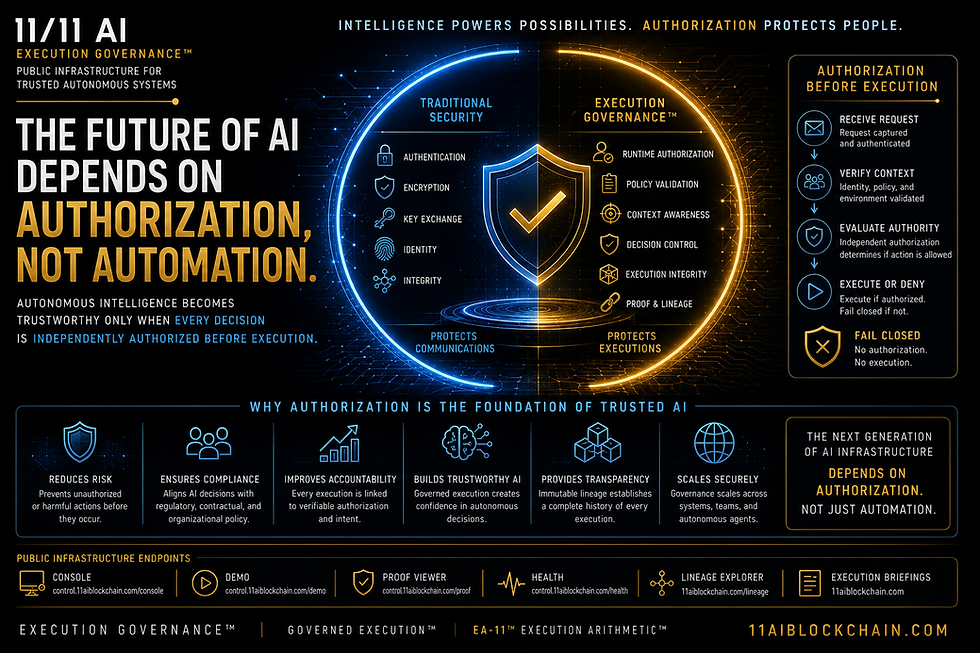
Moving from simulation to real-world execution presents significant challenges. Autonomous systems must operate safely and reliably in unpredictable environments. This requires robust control layers that monitor AI behavior, enforce constraints and intervene when necessary.
Control layers act as a safety net, ensuring AI actions align with organizational goals and regulatory requirements. They provide visibility into system status and enable human operators to override decisions if needed. For example, in autonomous vehicles, control layers monitor sensor inputs and AI commands to prevent accidents.
Enterprises will need to build infrastructure that integrates these control layers with AI orchestration and memory components. This integration creates a comprehensive framework where autonomous systems can function independently while remaining accountable and controllable.
Practical Implications for Enterprises
The evolution of AI agents into autonomous systems will transform enterprise operations across industries:
Manufacturing: Autonomous systems will manage production lines, quality control and supply chains with minimal human input, increasing throughput and reducing downtime.
Logistics: AI fleets will optimize delivery routes, warehouse management and inventory replenishment, improving speed and reducing costs.
Energy: Smart grids and facilities will self-regulate energy consumption, maintenance schedules and emergency responses, enhancing sustainability and reliability.
IT Operations: Autonomous agents will monitor networks, detect anomalies and resolve issues proactively, reducing outages and manual workload.
Enterprises must invest in scalable infrastructure that supports orchestration, persistent memory, self-learning and control layers. This includes cloud platforms, edge computing, secure data storage and real-time analytics. Building these foundations will enable AI systems to operate autonomously while maintaining transparency and control.
Preparing for the Autonomous Future
To prepare for this shift, organizations should:
Evaluate current AI deployments and identify opportunities for increased autonomy.
Develop data strategies that support persistent memory and continuous learning.
Design control frameworks that balance autonomy with human oversight.
Collaborate with technology providers to build integrated infrastructure.
Train teams to manage and interact with autonomous systems effectively.

Comments