
The Evolution of AI: Structural Accountability in a Shifting Landscape of Governance and Economics
- 11/11 AI

- Feb 6
- 5 min read
Artificial intelligence has reached a pivotal moment. The rapid advances in model architectures and training techniques have given way to a new phase where the focus shifts from isolated algorithmic breakthroughs to the broader systems that support AI deployment and operation. This transition demands a deeper understanding of the infrastructure, governance and economic factors shaping AI’s future.
This paper presents a theoretical framework and formal system model. No empirical evaluation is provided, as the goal is to establish structural properties and design constraints rather than implementation performance.
From Model-Centric to System-Centric AI
For much of AI’s recent history, progress centered on improving individual models. Researchers competed to develop larger, more accurate neural networks, pushing the boundaries of architecture design and training data scale. While these advances remain important, the dominant challenge now lies in integrating models into complex, scalable systems.
AI is no longer a standalone feature or isolated algorithm. It functions as part of a broader ecosystem involving data pipelines, hardware accelerators, runtime environments and user interfaces. This system-centric view recognizes that model performance alone does not determine AI’s impact or viability. Instead, the architecture of the entire AI stack from data ingestion to inference delivery defines success.
This shift requires new design principles that prioritize modularity, interoperability and maintainability. Systems must accommodate continuous updates, diverse workloads and evolving regulatory requirements. The complexity of these environments demands rigorous architectural frameworks that balance flexibility with control.
Why Inference and Runtime Economics Dominate Scalability
Training large AI models remains resource-intensive but is a relatively infrequent event. In contrast, inference the process of running models to generate outputs occurs continuously at scale. This runtime phase drives the majority of operational costs and shapes user experience.
The economics of inference now dominate AI scalability decisions. Organizations must optimize for latency, throughput, and cost efficiency in real-time environments. This focus influences hardware choices, model compression techniques and deployment strategies.
For example, edge computing deployments prioritize low-latency inference close to data sources, reducing bandwidth and improving responsiveness. Cloud providers invest heavily in specialized AI accelerators designed to maximize inference throughput per watt. These infrastructure decisions reflect the economic imperative to deliver AI services sustainably at scale.
Understanding runtime economics also highlights trade-offs between model complexity and operational feasibility. Larger models may offer marginal accuracy gains but incur disproportionate inference costs. System architects must balance these factors to meet business and technical constraints.
AI as Infrastructure Rather Than a Feature
AI increasingly functions as foundational infrastructure rather than a discrete feature. This perspective treats AI capabilities as core components embedded within broader digital ecosystems, analogous to databases or networking layers.
Viewing AI as infrastructure implies long-term commitments to reliability, scalability, and security. It demands robust monitoring, fault tolerance and upgrade paths. Organizations must build AI platforms that support diverse applications, user bases and compliance regimes.
This infrastructure mindset also shifts responsibility for AI outcomes from isolated teams to enterprise-wide governance structures. AI capabilities become shared resources requiring coordinated management, risk assessment and accountability mechanisms.
For example, financial institutions deploying AI for fraud detection integrate these systems deeply into transaction processing pipelines. The AI infrastructure must operate continuously with high availability and strict auditability, reflecting its critical role.
Governance as an Architectural Requirement
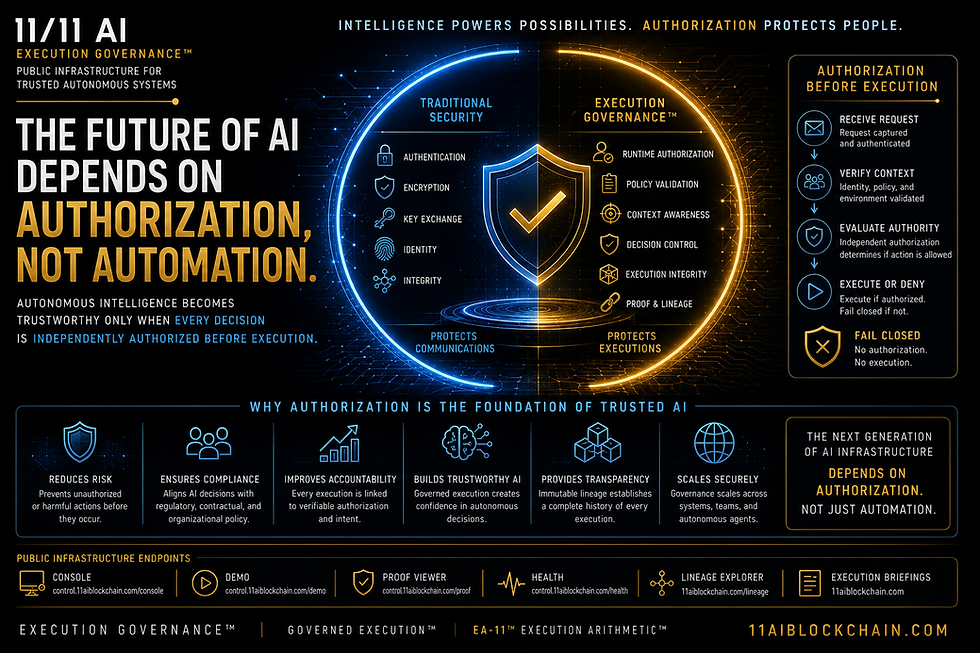
Governance is no longer an afterthought but a fundamental architectural requirement for AI systems. Effective governance encompasses policy enforcement, ethical considerations, transparency and compliance with legal frameworks.
Embedding governance into AI architecture means designing systems that support traceability, explainability, and control. This includes audit logs, access controls and mechanisms to detect and mitigate bias or misuse.
Regulatory environments increasingly mandate governance features. For instance, data protection laws require strict controls over personal information used in AI training and inference. Organizations must architect systems that can enforce these rules automatically and reliably.
Governance also involves defining roles and responsibilities across stakeholders. Clear accountability structures help manage risks and ensure that AI operates within defined boundaries.
Security and Post-Quantum Considerations
Security concerns in AI extend beyond traditional cybersecurity to include model integrity, data confidentiality and adversarial robustness. AI systems face unique threats such as model inversion, poisoning attacks, and exploitation of vulnerabilities in training data.
Architecting secure AI requires multi-layered defenses spanning hardware, software, and operational processes. Techniques like differential privacy, secure multiparty computation and federated learning help protect sensitive data.
Looking ahead, post-quantum cryptography presents a critical challenge. Quantum computing threatens to break widely used encryption schemes, potentially exposing AI systems to new attack vectors. Preparing AI infrastructure for a post-quantum world involves adopting quantum-resistant algorithms and updating security protocols.
Organizations must proactively integrate these considerations into AI system design to maintain trust and resilience.
Platforms Replacing Standalone AI Models
The era of standalone AI models is giving way to integrated platforms that combine multiple models, data sources, and services. These platforms provide unified interfaces, orchestration and lifecycle management.
Platforms enable reuse, scalability, and consistent governance across AI applications. They facilitate continuous model updates, A/B testing and performance monitoring. This approach reduces fragmentation and operational overhead.
For example, large technology companies offer AI platforms that support natural language processing, computer vision and recommendation systems within a single environment. Enterprises adopt these platforms to accelerate development and maintain control.
This trend reflects the increasing complexity of AI deployments and the need for cohesive system management.
Energy, Compute and Physical Constraints
AI’s growth faces tangible physical constraints related to energy consumption, compute capacity and hardware availability. Training state-of-the-art models demands massive computational resources, often concentrated in data centers with significant power requirements.
Energy efficiency has become a critical design criterion. Innovations in hardware architecture, such as tensor processing units and neuromorphic chips, aim to reduce power usage per operation. Software optimizations like quantization and pruning further improve efficiency.
Physical constraints also influence geographic distribution of AI infrastructure. Proximity to renewable energy sources, cooling capabilities and network connectivity affect data center placement.
These factors impose limits on AI scalability and necessitate trade-offs between performance, cost and environmental impact.
Regulatory and Compliance Pressures
Regulatory frameworks governing AI are evolving rapidly. Governments and international bodies introduce rules addressing data privacy, algorithmic fairness, transparency and liability.
Compliance pressures require organizations to embed legal and ethical considerations into AI system design. This includes mechanisms for data provenance, consent management, and impact assessments.
Non-compliance risks include fines, reputational damage and operational restrictions. Proactive engagement with regulators and adoption of standards help mitigate these risks.
For example, the European Union’s AI Act proposes strict requirements for high-risk AI applications, mandating risk management systems and human oversight.
The Emerging Divide Between Capability Chasers and System Builders
The AI community is diverging into two distinct groups. Capability chasers focus on pushing the limits of model performance and novel algorithms. System builders prioritize creating scalable, maintainable and governed AI infrastructures.
This divide reflects differing priorities and skill sets. Capability chasers drive innovation in model design and training techniques. System builders address integration, deployment and operational challenges.
Both roles are essential. However, the maturation of AI depends increasingly on system builders who ensure that AI technologies function reliably, ethically and economically in real-world contexts.
Organizations must balance investment between these approaches to sustain progress and manage risks.

Final Thoughts on AI’s Maturation Phase
AI is entering a phase defined by structural accountability rather than algorithmic novelty. The focus shifts from isolated breakthroughs to the architecture, governance, and economics that enable responsible, scalable AI deployment.
This evolution demands new frameworks that integrate technical, operational, and regulatory dimensions. Success depends on building systems that are transparent, secure, efficient and compliant.

Comments