
The Future of Distributed Systems: Ensuring Trusted Execution in Orbital Computing
- 11/11 AI

- Mar 31
- 4 min read
The landscape of distributed systems is evolving rapidly. With companies like SpaceX deploying compute and infrastructure into orbit, the traditional boundaries of where and how computing happens are shifting. Compute is no longer confined to terrestrial data centers. Instead, it is becoming global, mobile and increasingly autonomous. This shift brings new challenges, especially around how systems execute tasks and maintain trust in their operations.
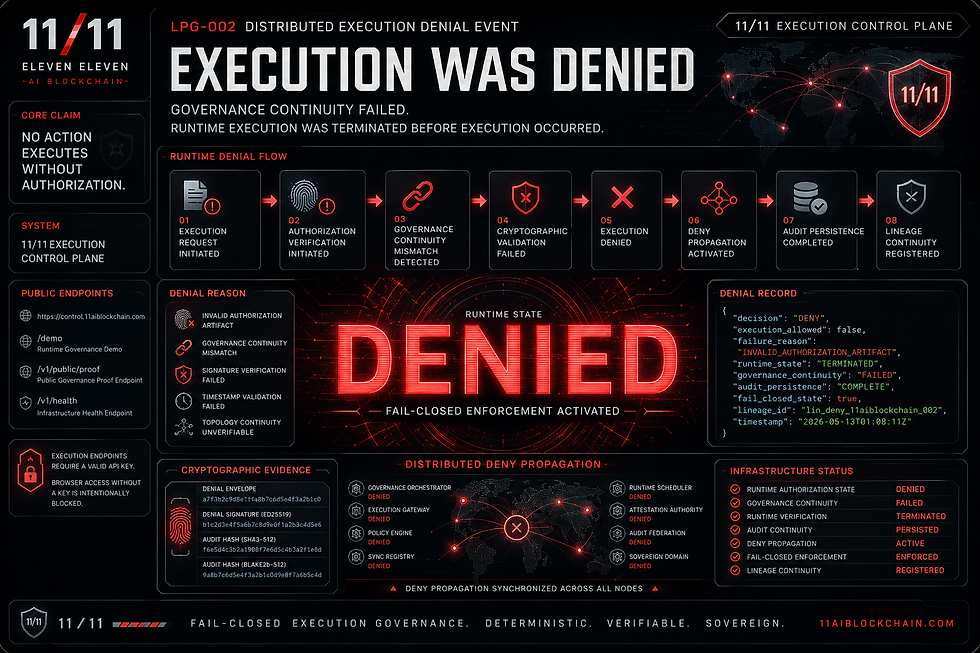
As distributed systems expand beyond Earth’s surface into orbital environments, the focus moves from raw compute power to execution control. In many current systems, actions are executed first and validated afterward. This approach works well on Earth, where systems can often afford to check results and roll back if needed. But in space, defense and autonomous environments, this model fails. Execution cannot be assumed to be trusted; it must be verified before it happens.
This blog explores why execution assurance is critical for the next generation of distributed systems, especially those spanning ground and orbital platforms. It also introduces how new execution-layer systems are designed to validate actions before execution, enforce constraints during runtime and provide verifiable outcomes after execution.
The Shift from Compute Power to Execution Control
Distributed systems have traditionally focused on increasing compute capacity and connectivity. Data centers grew larger, networks faster and cloud platforms more scalable. But as compute moves into orbit, the environment changes dramatically:
Latency and connectivity become less predictable.
Physical access for maintenance or intervention is limited or impossible.
Autonomy becomes essential, as human operators cannot control every action in real time.
Security risks increase, as systems operate in exposed and contested environments.
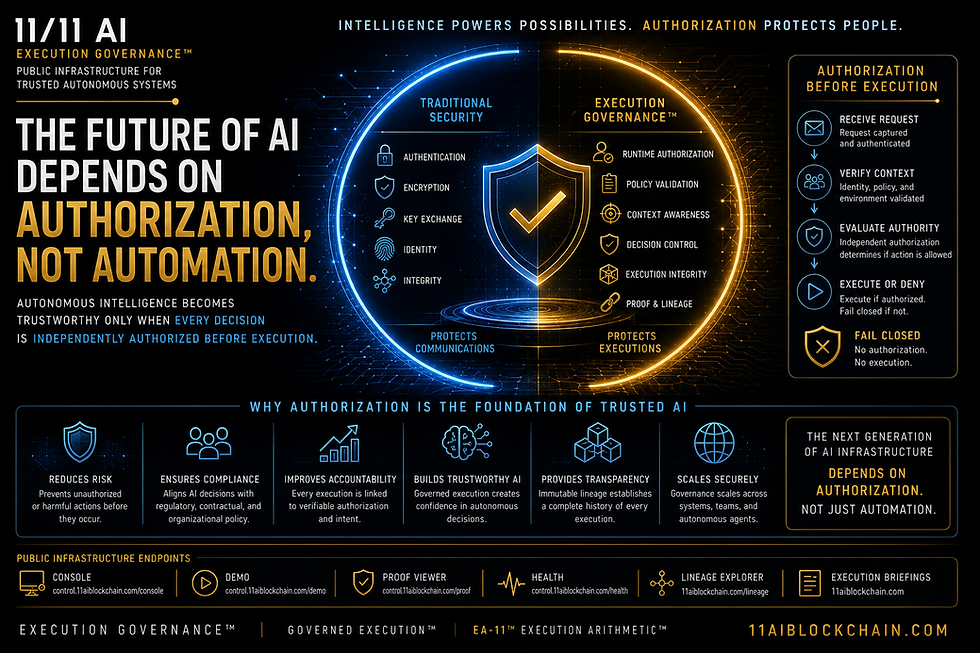
In this context, simply having powerful compute resources is not enough. Systems must guarantee that every action they take is authorized, safe and verifiable. This means shifting the model from “execute first, validate later” to “validate before execution.”
Why Traditional Execution Models Break Down in Space
On Earth, many distributed systems rely on post-execution validation. For example, a cloud service might run a process and then check logs or audit trails to ensure compliance. If something goes wrong, it can often be corrected or rolled back.
In space or autonomous defense systems, this approach is risky:
Rollback may be impossible. Once a satellite executes a command, it cannot undo it.
Errors can have catastrophic consequences. A wrong maneuver or unauthorized action could damage hardware or compromise missions.
Communication delays prevent real-time human intervention.
Adversarial threats require that systems prove their actions are legitimate before they happen.
This environment demands execution assurance a system that guarantees actions are valid, safe and compliant before they occur.
What Execution Assurance Means for Distributed Systems
Execution assurance involves three key capabilities:
Pre-execution validation
Every action or command is checked against a set of rules and constraints before it is allowed to run. This prevents unauthorized or unsafe operations.
Runtime enforcement
During execution, the system continuously monitors compliance with constraints. If a violation is detected, it can halt or modify the operation.
Post-execution verification
After execution, the system produces verifiable evidence that the action was performed correctly and within the defined rules.
Together, these capabilities create a trusted execution environment that is essential for distributed systems operating in complex, high-risk scenarios.
Building Execution Assurance for Orbital and Ground Systems
At 11/11, we are developing an execution-layer system designed specifically for distributed environments that span ground and orbital platforms. This system integrates tightly with compute infrastructure to provide:
Action validation before execution using formal verification and policy enforcement.
Constraint enforcement during runtime to ensure operations remain within safe boundaries.
Verifiable outcomes that provide audit trails and proof of compliance.
This approach supports a wide range of applications, from satellite control and space logistics to autonomous defense systems and edge computing in remote locations.

The Disappearing Boundary Between Earth and Orbit
As compute infrastructure expands into orbit, the line between terrestrial and space systems blurs. Satellites, space stations, and orbital platforms become extensions of the global compute fabric. This creates new opportunities but also new risks.
Trusted execution becomes the constant requirement across all environments. Whether a system runs in a data center, at the edge, or on an orbital platform, it must operate under verifiable control. This ensures:
Security against unauthorized commands or malicious interference.
Reliability in mission-critical operations.
Autonomy with confidence that actions are safe and compliant.
Practical Examples of Execution Assurance in Orbital Computing
Satellite Command and Control
Commands sent to satellites must be validated before execution to prevent accidental or malicious damage. Execution assurance systems verify commands against mission rules and safety constraints.
Autonomous Spacecraft Operations
Spacecraft performing autonomous maneuvers rely on runtime enforcement to ensure they do not exceed operational limits or violate safety protocols.
Distributed Sensor Networks in Orbit
Sensor data processing and decision-making require verifiable execution to maintain trust in the system’s outputs, especially when human oversight is limited.
Preparing for the Next Infrastructure Layer
The future of distributed systems is not just about compute power or network speed. It is about execution the ability to control, verify, and trust every action a system takes. As infrastructure scales across Earth and orbit, execution assurance will define which systems can operate autonomously and which cannot.
Organizations building the next generation of distributed systems must prioritize execution-layer technologies that provide:
Pre-execution validation to prevent unsafe actions.
Runtime monitoring to enforce constraints.
Post-execution verification to prove compliance.
This foundation will enable safe, reliable, and trusted operations in the most challenging environments.

Comments