
RFC-EG-092 Execution Governance Establishes Deterministic Runtime Assurance


Modern AI infrastructure increasingly depends on autonomous runtime systems operating continuously across distributed environments.
AI systems now:
orchestrate runtime execution
automate operational workflows
coordinate distributed services
manage regulated compute infrastructure
execute machine-speed operational decisions
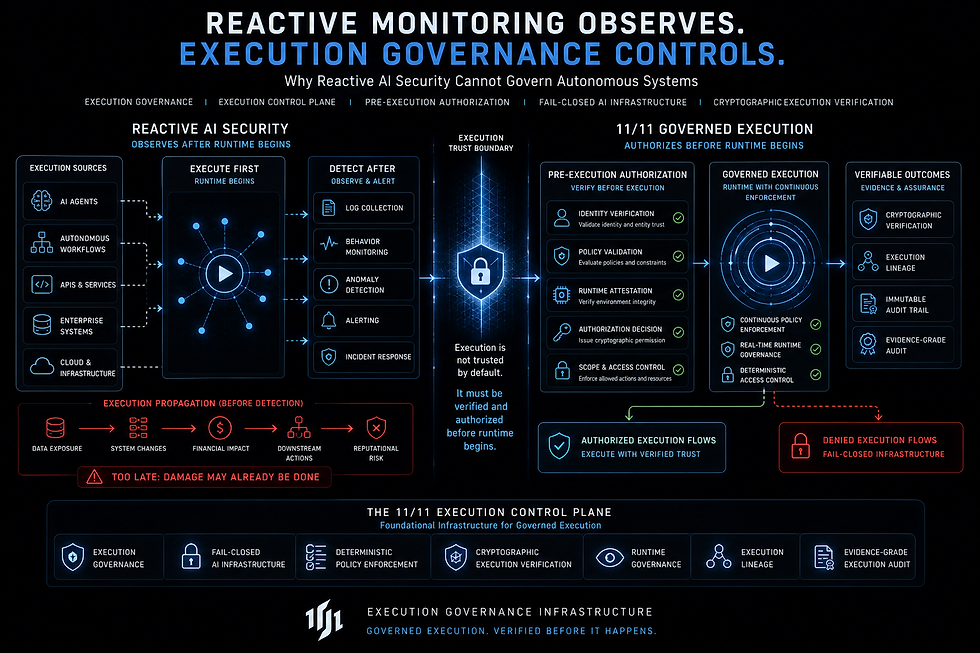
Traditional security systems primarily:
monitor runtime activity
inspect telemetry after execution
analyze logs retrospectively
respond after operational impact occurs
That model no longer establishes sufficient runtime assurance.
Execution itself is now the infrastructure trust boundary.
11/11 Execution Governance Infrastructure establishes a governed runtime model where runtime assurance is deterministically enforced before and during execution.
No action executes without authorization.
Under this architecture:
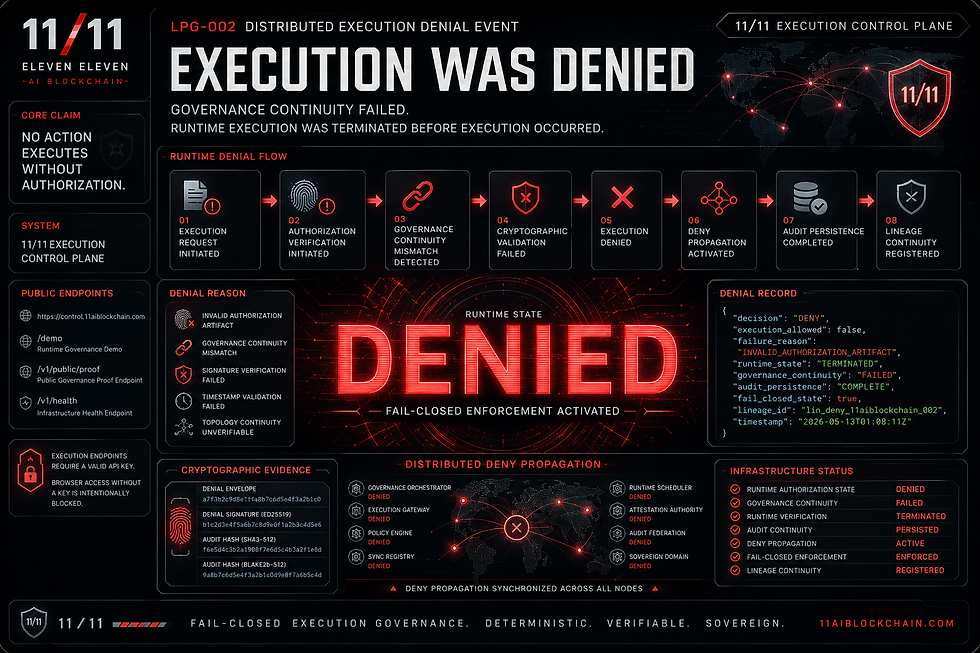
execution requests are evaluated before runtime activation
governance enforcement remains continuously active
unauthorized actions fail closed
cryptographic verification validates runtime trust
immutable execution lineage persists across runtime states
Execution transitions from:
“observe runtime”to:“deterministically assure runtime integrity.”
Public execution governance infrastructure is now operational:
Public Governance Console
Runtime Governance Demo
Public Governance Proof Viewer
Infrastructure Health Dashboard
Execution Lineage Explorer
Execution governance establishes:
deterministic runtime assurance
continuous authorization
immutable execution lineage
fail-closed operational control
Execution can no longer rely on:
inferred trust
reactive monitoring
post-execution analysis
Execution must become:
authorized
governed
continuously enforced
fail-closed by design
11/11 is building the execution governance layer for AI and regulated compute infrastructure.

Comments